
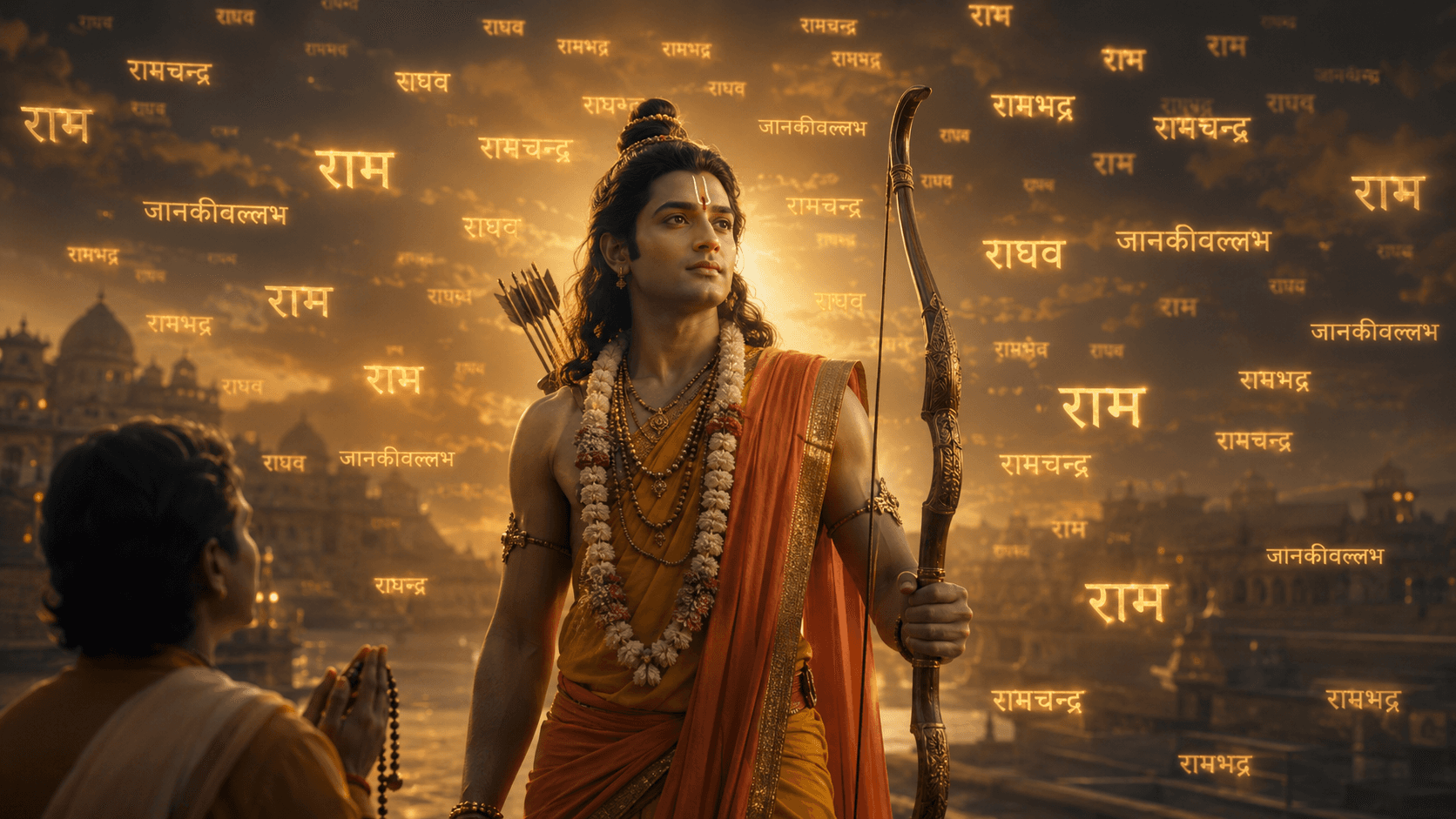
Lord Rama is remembered not through one name alone.
Some names speak of His truth and self-control. Some remember His love for Sita, His bond with Hanuman, His Raghu lineage, or important moments from the Ramayana. Others honor Shri Ram as the Supreme Being.
This traditional collection is known as the Shri Rama Ashtottara Shatanamavali—a devotional sequence of the 108 names of Lord Rama.
Each name opens a different window into the character, life and spiritual identity of Shri Ram.
Devotees who also repeat Ram Naam as counted Japa can use the Ram Naam Japa Counter to keep track of their daily repetitions.
What Is Shri Ram Ashtottara Shatanamavali?
Ashtottara Shatanamavali means a devotional garland or sequence of 108 names.
In the 108 names of Shri Ram, names such as Rajivalochana remember His lotus-like eyes, Janaki Vallabha His relationship with Sita, Raghava His Raghu lineage, while names such as Satyavache and Dayasara reflect truth and compassion.
Different traditional Rama Namavali recensions exist. To avoid mixing separate lists, the sequence below consistently follows the Sanskrit Documents recension of Śrī Rāmāṣṭottara Śatanāmāvali, from Śrīrāma through Parasmai.
108 Names of Lord Rama With Meanings
The meanings below are intentionally concise. Some names are direct descriptions; others refer to episodes in the Ramayana or express theological ideas about Shri Ram.
No. | Sacred Name / Mantra | English Meaning |
|---|---|---|
1 | ॐ श्रीरामाय नमः (Om Shriramaya Namah) | Salutations to Shri Rama |
2 | ॐ रामभद्राय नमः (Om Ramabhadraya Namah) | Salutations to the auspicious and gracious Rama |
3 | ॐ रामचन्द्राय नमः (Om Ramachandraya Namah) | Rama, radiant and gentle like the moon |
4 | ॐ शाश्वताय नमः (Om Shashvataya Namah) | The Eternal One |
5 | ॐ राजीवलोचनाय नमः (Om Rajivalochanaya Namah) | The lotus-eyed One |
6 | ॐ श्रीमते नमः (Om Shrimate Namah) | The glorious and auspicious One |
7 | ॐ राजेन्द्राय नमः (Om Rajendraya Namah) | King among kings |
8 | ॐ रघुपुङ्गवाय नमः (Om Raghupungavaya Namah) | Foremost of the Raghu dynasty |
9 | ॐ जानकीवल्लभाय नमः (Om Janakivallabhaya Namah) | Beloved of Janaki, Sita |
10 | ॐ जैत्राय नमः (Om Jaitraya Namah) | The victorious One |
11 | ॐ जितामित्राय नमः (Om Jitamitraya Namah) | Conqueror of enemies |
12 | ॐ जनार्दनाय नमः (Om Janardanaya Namah) | Protector and refuge of people |
13 | ॐ विश्वामित्रप्रियाय नमः (Om Vishvamitrapriyaya Namah) | Beloved of Sage Vishwamitra |
14 | ॐ दान्ताय नमः (Om Dantaya Namah) | The self-controlled One |
15 | ॐ शरणत्राणतत्पराय नमः (Om Sharanatranatatparaya Namah) | Ever devoted to protecting those who seek refuge |
16 | ॐ वालिप्रमथनाय नमः (Om Valipramathanaya Namah) | Vanquisher of Vali |
17 | ॐ वाग्मिने नमः (Om Vagmine Namah) | The eloquent speaker |
18 | ॐ सत्यवाचे नमः (Om Satyavache Namah) | Speaker of truth |
19 | ॐ सत्यविक्रमाय नमः (Om Satyavikramaya Namah) | The truly valiant One |
20 | ॐ सत्यव्रताय नमः (Om Satyavrataya Namah) | Firm in truthful vows |
21 | ॐ व्रतधराय नमः (Om Vratadharaya Namah) | Upholder of sacred vows |
22 | ॐ सदाहनुमदाश्रिताय नमः (Om Sadahanumadashritaya Namah) | Ever associated with devoted Hanuman |
23 | ॐ कौसलेयाय नमः (Om Kausaleyaya Namah) | Son of Kausalya |
24 | ॐ खरध्वसिने नमः (Om Kharadhvasine Namah) | Destroyer of Khara |
25 | ॐ विराधवधपण्डिताय नमः (Om Viradhavadhapanditaya Namah) | Skilled slayer of Viradha |
26 | ॐ विभीषणपरित्रात्रे नमः (Om Vibhishanaparitratre Namah) | Protector of Vibhishana |
27 | ॐ हरकोदण्डखण्डनाय नमः (Om Harakodandakhandanaya Namah) | Breaker of Lord Shiva’s bow |
28 | ॐ सप्ततालप्रभेत्त्रे नमः (Om Saptatalaprabhettre Namah) | Piercer of the seven Tala trees |
29 | ॐ दशग्रीवशिरोहराय नमः (Om Dashagrivashiroharaya Namah) | Slayer of ten-headed Ravana |
30 | ॐ जामदग्न्यमहादर्पदलनाय नमः (Om Jamadagnyamahadarpadalanaya Namah) | Destroyer of Parashurama’s great pride |
31 | ॐ ताटकान्तकाय नमः (Om Tatakantakaya Namah) | Slayer of Tataka |
32 | ॐ वेदान्तसाराय नमः (Om Vedantasaraya Namah) | Essence of Vedanta |
33 | ॐ वेदात्मने नमः (Om Vedatmane Namah) | The very essence of the Vedas |
34 | ॐ भवरोगस्यभेषजाय नमः (Om Bhavarogasya Bheshajaya Namah) | Remedy for the suffering of worldly existence |
35 | ॐ दूषणत्रिशिरोहन्त्रे नमः (Om Dushanatrishirohantre Namah) | Slayer of Dushana and Trishira |
36 | ॐ त्रिमूर्तये नमः (Om Trimurtaye Namah) | Embodiment of the three divine forms |
37 | ॐ त्रिगुणात्मकाय नमः (Om Trigunatmakaya Namah) | Embodiment of the three Gunas |
38 | ॐ त्रिविक्रमाय नमः (Om Trivikramaya Namah) | The Lord of the three strides |
39 | ॐ त्रिलोकात्मने नमः (Om Trilokatmane Namah) | Soul of the three worlds |
40 | ॐ पुण्यचारित्रकीर्तनाय नमः (Om Punyacharitrakirtanaya Namah) | One whose sacred deeds are praised |
41 | ॐ त्रिलोकरक्षकाय नमः (Om Trilokarakshakaya Namah) | Protector of the three worlds |
42 | ॐ धन्विने नमः (Om Dhanvine Namah) | Wielder of the bow |
43 | ॐ दण्डकारण्यकर्तनाय नमः (Om Dandakaranyakartanaya Namah) | Destroyer of evil in the Dandaka forest |
44 | ॐ अहल्याशापशमनाय नमः (Om Ahalyashapashamanaya Namah) | Remover of Ahalya’s curse |
45 | ॐ पितृभक्ताय नमः (Om Pitribhaktaya Namah) | Devoted to His father |
46 | ॐ वरप्रदाय नमः (Om Varapradaya Namah) | Bestower of boons |
47 | ॐ जितेन्द्रियाय नमः (Om Jitendriyaya Namah) | Master of the senses |
48 | ॐ जितक्रोधाय नमः (Om Jitakrodhaya Namah) | Conqueror of anger |
49 | ॐ जितामित्राय नमः (Om Jitamitraya Namah) | Conqueror of adversaries |
50 | ॐ जगद्गुरवे नमः (Om Jagadgurave Namah) | Teacher of the world |
51 | ॐ ऋक्षवानरसङ्घातिने नमः (Om Rikshavanarasanghatine Namah) | Leader who united the bears and Vanaras |
52 | ॐ चित्रकूटसमाश्रयाय नमः (Om Chitrakutasamashrayaya Namah) | One who dwelt at Chitrakoot |
53 | ॐ जयन्तत्राणवरदाय नमः (Om Jayantatranavaradaya Namah) | Protector and benefactor of Jayanta |
54 | ॐ सुमित्रापुत्रसेविताय नमः (Om Sumitraputrasevitaya Namah) | Served by Lakshmana, son of Sumitra |
55 | ॐ सर्वदेवाधिदेवाय नमः (Om Sarvadevadhidevaya Namah) | Supreme God above all gods |
56 | ॐ मृतवानरजीवनाय नमः (Om Mritavanarajivanaya Namah) | Restorer of the fallen Vanaras to life |
57 | ॐ मायामारीचहन्त्रे नमः (Om Mayamarichahantre Namah) | Slayer of the illusion-wielding Maricha |
58 | ॐ महादेवाय नमः (Om Mahadevaya Namah) | The Great Lord |
59 | ॐ महाभुजाय नमः (Om Mahabhujaya Namah) | The mighty-armed One |
60 | ॐ सर्वदेवस्तुताय नमः (Om Sarvadevastutaya Namah) | Praised by all the gods |
61 | ॐ सौम्याय नमः (Om Saumyaya Namah) | The gentle and serene One |
62 | ॐ ब्रह्मण्याय नमः (Om Brahmanyaya Namah) | Protector of sacred wisdom and Dharma |
63 | ॐ मुनिसंस्तुताय नमः (Om Munisamstutaya Namah) | Praised by sages |
64 | ॐ महायोगिने नमः (Om Mahayogine Namah) | The great Yogi |
65 | ॐ महोदाराय नमः (Om Mahodaraya Namah) | The magnanimous and noble One |
66 | ॐ सुग्रीवेप्सितराज्यदाय नमः (Om Sugrivepsitarajyadaya Namah) | Giver of the desired kingdom to Sugriva |
67 | ॐ सर्वपुण्याधिकफलाय नमः (Om Sarvapunyadhikaphalaya Namah) | The supreme fruit of virtuous deeds |
68 | ॐ स्मृतसर्वाघनाशनाय नमः (Om Smritasarvaghanashanaya Namah) | Whose remembrance destroys sins |
69 | ॐ आदिपुरुषाय नमः (Om Adipurushaya Namah) | The primordial Being |
70 | ॐ परमपुरुषाय नमः (Om Paramapurushaya Namah) | The Supreme Being |
71 | ॐ महापुरुषाय नमः (Om Mahapurushaya Namah) | The Great Being |
72 | ॐ पुण्योदयाय नमः (Om Punyodayaya Namah) | Source of merit and auspiciousness |
73 | ॐ दयासाराय नमः (Om Dayasaraya Namah) | Essence of compassion |
74 | ॐ पुराणपुरुषोत्तमाय नमः (Om Puranapurushottamaya Namah) | The ancient Supreme Person |
75 | ॐ स्मितवक्त्राय नमः (Om Smitavaktraya Namah) | One with a smiling face |
76 | ॐ मितभाषिणे नमः (Om Mitabhashine Namah) | One who speaks with measure |
77 | ॐ पूर्वभाषिणे नमः (Om Purvabhashine Namah) | One who courteously speaks first |
78 | ॐ राघवाय नमः (Om Raghavaya Namah) | Descendant of the Raghu dynasty |
79 | ॐ अनन्तगुणगम्भीराय नमः (Om Anantagunagambhiraya Namah) | Profound and filled with infinite virtues |
80 | ॐ धीरोदात्तगुणोत्तमाय नमः (Om Dhirodatta Gunottamaya Namah) | Supreme in noble and heroic qualities |
81 | ॐ मायामानुषचरित्राय नमः (Om Mayamanushacharitraya Namah) | The Divine appearing and acting in human form |
82 | ॐ महादेवादिपूजिताय नमः (Om Mahadevadipujitaya Namah) | Worshipped by Mahadeva and other deities |
83 | ॐ सेतुकृते नमः (Om Setukrite Namah) | Builder of the bridge to Lanka |
84 | ॐ जितवाराशिये नमः (Om Jitavarashiye Namah) | Conqueror of the ocean |
85 | ॐ सर्वतीर्थमयाय नमः (Om Sarvatirthamayaya Namah) | Embodiment of all sacred pilgrimage places |
86 | ॐ हरये नमः (Om Haraye Namah) | Hari, the remover of evil |
87 | ॐ श्यामाङ्गाय नमः (Om Shyamangaya Namah) | The dark-complexioned One |
88 | ॐ सुन्दराय नमः (Om Sundaraya Namah) | The beautiful One |
89 | ॐ शूराय नमः (Om Shuraya Namah) | The valiant hero |
90 | ॐ पीतवाससे नमः (Om Pitavasase Namah) | Wearer of yellow garments |
91 | ॐ धनुर्धराय नमः (Om Dhanurdharaya Namah) | Bearer of the bow |
92 | ॐ सर्वयज्ञाधिपाय नमः (Om Sarvayajnādhipaya Namah) | Lord of all sacred sacrifices |
93 | ॐ यज्वने नमः (Om Yajvane Namah) | Performer of sacred sacrifices |
94 | ॐ जरामरणवर्जिताय नमः (Om Jaramaranavarjitaya Namah) | Free from old age and death |
95 | ॐ विभीषणप्रतिष्ठात्रे नमः (Om Vibhishanapratishthatre Namah) | One who established Vibhishana as king |
96 | ॐ सर्वापगुणवर्जिताय नमः (Om Sarvapagunavarjitaya Namah) | Free from all faults and evil qualities |
97 | ॐ परमात्मने नमः (Om Paramatmane Namah) | The Supreme Self |
98 | ॐ परस्मैब्रह्मणे नमः (Om Parasmai Brahmane Namah) | The Supreme Brahman |
99 | ॐ सच्चिदानन्दविग्रहाय नमः (Om Sachchidanandavigrahaya Namah) | Embodiment of existence, consciousness and bliss |
100 | ॐ परस्मै ज्योतिषे नमः (Om Parasmai Jyotishe Namah) | The Supreme Light |
101 | ॐ परस्मैधाम्ने नमः (Om Parasmai Dhamne Namah) | The Supreme Abode |
102 | ॐ पराकाशाय नमः (Om Parakashaya Namah) | The supreme spiritual expanse |
103 | ॐ परात्पराय नमः (Om Paratparaya Namah) | Higher than the highest |
104 | ॐ परेशाय नमः (Om Pareshaya Namah) | The Supreme Lord |
105 | ॐ पारगाय नमः (Om Paragaya Namah) | One who has crossed to the farther shore |
106 | ॐ पाराय नमः (Om Paraya Namah) | The transcendent Supreme |
107 | ॐ सर्वदेवात्मकाय नमः (Om Sarvadevatmakaya Namah) | The essence of all deities |
108 | ॐ परस्मै नमः (Om Parasmai Namah) | Salutations to the Supreme One |
The Sanskrit order above follows one traditional recension without combining names from other Lord Rama 108 names lists. In particular, this recension contains Vibhīṣaṇapratiṣṭhātre as name 95; the Ramayana itself records Rama establishing Vibhishana as king of Lanka.
Also Read: Ram Navami Mantra
What Do the 108 Names of Shri Ram Represent?
The beauty of the Shri Ram 108 names is that they do not describe only one side of Lord Rama.
Some describe His character:
Satyavache — truthful in speech.
Jitakrodha — conqueror of anger.
Dayasara — essence of compassion.
Others preserve the Ramayana within the Namavali itself: Vishwamitra, Ahalya, Vali, Sugriva, Vibhishana, Chitrakoot, Ravana and the bridge to Lanka all appear through different names.
This matches the way Valmiki describes Rama:
रामो विग्रहवान् धर्मः साधुः सत्यपराक्रमः।
“Rama is dharma embodied… His strength is truth.” — Valmiki Ramayana, Aranya Kanda 3.37.13.
In this way, the 108 Rama names become almost a miniature spiritual portrait of Shri Ram—His relationships, virtues, deeds and divine identity.
How to Chant the 108 Names of Lord Rama
The practice can be simple.
Sit peacefully and bring Shri Ram to mind.
Recite each name slowly:
Om Śrīrāmāya Namaḥ.
Om Rāmabhadrāya Namaḥ.
Continue through all 108 names.
Where possible, knowing the meaning can make the recitation more alive. When you say Satyavache, remember truth. When you say Dayasara, remember compassion. When you say Janaki Vallabha, remember Shri Ram with Sita.
There is an important distinction:
Shri Rama Ashtottara Shatanamavali means reciting 108 different Divine Names.
Ram Naam Japa 108 times means repeating one chosen Naam—such as Ram or Shri Ram—108 times.
Both are devotional practices, but they are not identical.
Can You Use a Japa Counter for the 108 Names of Shri Ram?
Yes.
A devotee may use a mala or counter to keep track when repeating the complete Namavali, performing several rounds, or combining it with a larger Naam Japa practice.
But remember the distinction:
Ashtottara Shatanamavali = 108 distinct names.
Naam Japa = repeated remembrance of one chosen Divine Name.
The counter is simply a tool.
The purpose remains remembrance of Lord Rama.
Also Read: Sita Ram Mantra
Remember Shri Ram Through His Divine Names
The 108 names of Lord Rama are more than a list.
Together, they remember Shri Ram as the beloved of Sita, son of Kausalya, descendant of Raghu, protector of devotees, conqueror of anger, embodiment of compassion, upholder of truth and the Supreme Divine.
Read them slowly.
Understand what each name reveals.
And as one sacred name leads to another, let the Namavali become what it was meant to be:
108 ways to remember Shri Ram.
Frequently Asked Questions
What are the 108 names of Lord Rama called?
They are commonly called Shri Rama Ashtottara Shatanamavali or Sri Rama Ashtottara Shatanamavali. The devotional sequence contains 108 sacred names or epithets of Shri Ram.
What does Ashtottara Shatanamavali mean?
It refers to a devotional collection or garland of 108 names. Each name remembers a particular quality, relationship, deed or divine aspect.
Can I chant the 108 names of Lord Rama daily?
Yes. Devotees may include the Namavali in regular worship or personal devotional chanting according to their tradition and available time. No elaborate practice is necessary simply to remember Shri Ram through His Divine Names.
Are the 108 names the same as chanting Ram Naam 108 times?
No. Reciting the 108 names of Ram means chanting 108 different names. Chanting Ram 108 times means repeating one Divine Name for one traditional counted round.
Is Rama Ashtottara Shatanamavali the same as Rama Sahasranama?
No. Ashtottara Shatanamavali contains 108 names. Sahasranama refers to a collection of 1,000 names. The phrase Rama Ashtothram is also commonly used when referring to the 108-name devotional recitation.